Tree RemovalTree CareLandscapingStump GrindingPermitsArborist
When is tree removal actually necessary?
Tree removal becomes unavoidable under five specific conditions. A dead or dying tree, showing signs of severe disease or decay that cannot be saved, poses a significant risk because it can fall with little warning. Storm damage that leaves a split trunk or broken branches creates an immediate safety hazard, especially near occupied buildings or sidewalks. Obstruction occurs when growth reaches power lines, or when overgrown roots damage foundations, driveways, or underground utilities — all of which can be costly to repair. Landscaping or renovation projects sometimes require a clear footprint for new construction, and a tree that stands in the way may need to go. Finally, a hazardous lean — any significant tilt toward a structure or high-traffic area — is a structural red flag that warrants removal. In every instance, a professional assessment confirms whether the tree is beyond repair before any cutting begins.
What steps does the removal process involve?
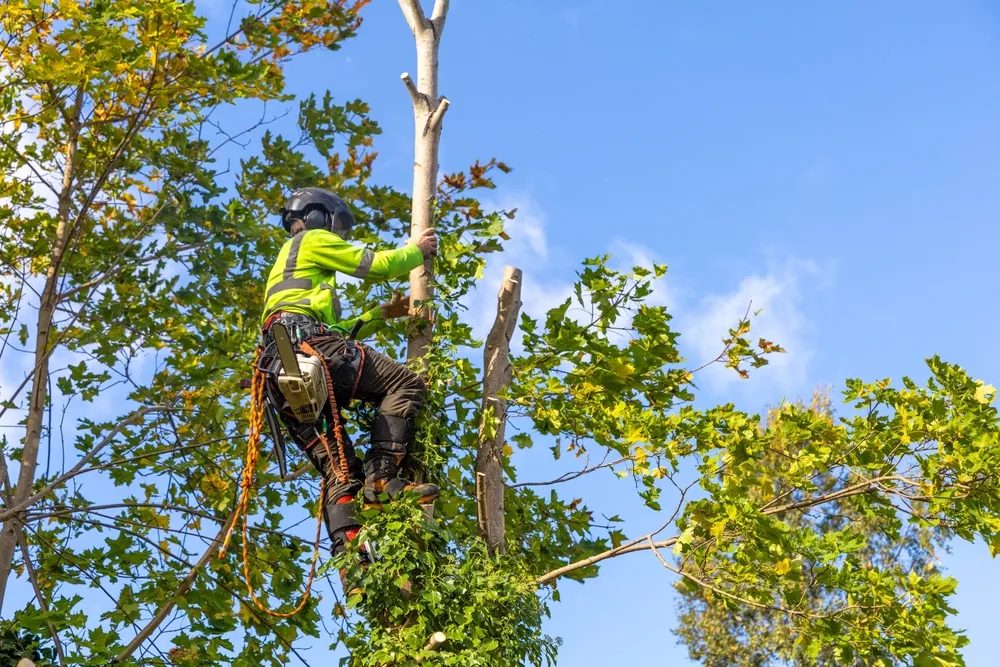
A professional removal follows a six-step sequence. First is the assessment, where the crew checks the tree's health, size, location, and proximity to power lines or buildings. Second, permits are handled if the local jurisdiction requires them, which is often the case for large or protected specimens. Third, the work area is prepared — barriers go up, and traffic is redirected if the tree sits near a road. Fourth, the tree comes down; for larger trees, branches are removed first to reduce weight, then the trunk is cut into manageable sections. Fifth, the stump is ground down to below ground level using a stump grinder, leaving the site level enough to replant or pave over. Sixth, the crew cleans up all branches, logs, and debris, with many services offering wood chipping or recycling so the tree becomes mulch or firewood. Each step is coordinated by the same team, so the job is handled end-to-end.
How do I choose a reputable tree removal service?
When evaluating tree services, the first check is credentials: the company must be licensed, insured, and have certified arborists on staff. Insurance protects you from liability if an accident occurs during the removal — confirm the policy covers property damage and worker injury. A certified arborist brings formal training in tree biology and structural risk assessment. Next, collect quotes from several companies; a bid that comes in far below the others often means omitted services or a lack of insurance. Ask for references and read recent online reviews. Inquire about the equipment the crew uses — modern, well-maintained rigs indicate a professional operation. Finally, get the entire scope of work in writing: does the quote include stump grinding, debris removal, and wood chipping, or are those line items added later? A reputable estimator will walk the property with you, explain the section-by-section removal plan, and specify any additional costs before you sign.
What happens to the stump and the leftover wood after the tree is down?
After the tree is down, two byproducts remain: the stump and the wood. Stump removal is often an optional add-on, so check whether your base quote includes it. If you want the stump dealt with separately, you can arrange for it to be ground down later, leaving the area usable for replanting or a new patio. The logs and branches, meanwhile, are typically hauled away as part of the cleanup. Several services offer wood chipping, which turns branches into mulch for garden beds, or they may recycle the logs into firewood. If you want to keep the firewood or mulch, say so before the work begins; otherwise, the crew will transport everything off-site. The exact scope of what gets hauled versus what stays is something to confirm in writing.
Do I need a permit to remove a tree?
A permit is not always required, but large or protected trees often fall under municipal tree protection ordinances. The permitting process, which the tree service can help navigate, typically involves submitting a request that documents the tree's species, size, and the reason for removal. In some towns, officials review the application to see if the tree qualifies for preservation — an assessment that can take a few days. A reputable service will check local code during the initial site assessment and handle the permit application so you don't have to. If you hire a crew that ignores the permit step, you risk having the work stopped by a building inspector or facing retroactive penalties. For homeowners, the key is to ask the estimator upfront whether a permit is needed for your specific tree; they'll know the jurisdiction's rules.
Can a storm-damaged tree be saved, or is removal always necessary?
Storm-damaged trees are not always a total loss, but certain damage patterns make removal unavoidable. Broken branches alone may not doom a tree—they can often be pruned away, and the tree might recover. However, a split trunk is a much more serious issue, as it compromises the tree's structural integrity, making it prone to falling without warning. Similarly, a tree that leans significantly, especially toward a structure or a high-traffic area, is a clear safety hazard. In both cases, the damage often puts the tree beyond repair, and removal is the only safe option. Even if the tree looks stable from the ground, internal damage from a storm can weaken it over time, increasing the risk of failure in future weather. For a tree with a split trunk or a dangerous lean, the probability of collapse is high, so delaying action is not advisable. The priority is to prevent injury and property damage, which is why removal is frequently the recommended course.