Tōhoku Road TripAomoriAkitaIwateOnsenSoba Challenge
Wade the 8-mile Oirase Gorge
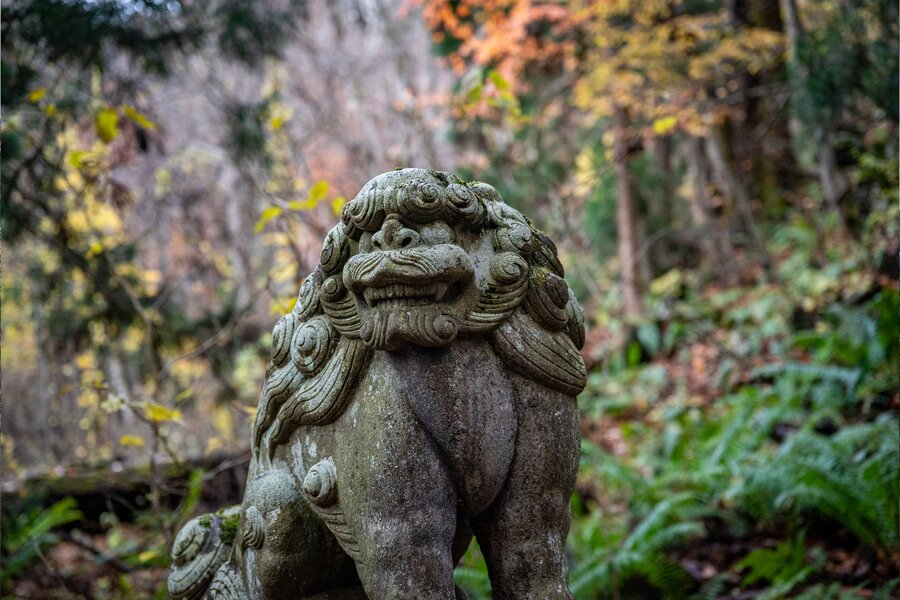
Oirase Gorge gives Tōhoku's best one-stop dose of mountain drama. The 8-mile river valley flows out of Lake Towada inside Towada-Hachimantai National Park, and the easy trail follows the water through dense deciduous forest, over mossy rocks, and past more than a dozen waterfalls. In autumn, Tsutanuma Pond turns into a mirror for the red foliage around it. The route ends at Towada Shrine, founded in 807 and guarded by stone lion-dog statues, a quiet place to honor the kami of the surrounding nature. Allow a morning; the gorge can be hiked, cycled, or stream-trekked by wading and scrambling over rocks. It sits close to Lakeside Noodle Kitchen Sakura, where lunch means miso or tonkotsu ramen with Aomori garlic. Those who want the full day can start at Lake Towada, pause for ramen at the water's edge, then follow the river until the shrine appears. The falls are the headline; the shrine gives the walk a purpose.
Take the wanko soba challenge at Azumaya
Azumaya opened in Morioka in 1907 and claims credit for inventing the wanko soba challenge. Diners put on a bib and keep lifting small bowl after small bowl of buckwheat noodles while staff chant 'Jan jan, don don.' The average person taps out around 50 bowls; the restaurant's standing record is 570. The point is less about the food than about the rhythm — noodles arrive continuously, and the chant keeps the pace light. Azumaya sits in Morioka's old town, which flourished under the 17th-century Nanbu clan, so the meal can be followed by a walk past black-and-white stucco storehouses and wooden townhouses preserved from that era. Then finish with a soy sauce soft serve at the nearby shop Kurabiyori, where miso syrup balances the salty cream. The restaurant is the rare eating challenge where losing feels like winning.
Soak at 400-year-old Fukenoyu
Fukenoyu has been drawing soakers for roughly 400 years, and it still feels like the old Japan. The day-use onsen in Kazuno, Akita, runs on gentle alkaline hot springs that have not yet attracted many foreign visitors. Soaking here feels older and slower than a modern spa. Its rustic wood architecture frames steaming outdoor pools set right against the forested Ōu Mountains, which turn red in autumn and snowy white in winter. Many Kazuno bathhouses also serve traditional breakfast sets of grilled fish, miso soup, rice, and pickled vegetables, so it is easy to make the soak the first stop of the day. The town sits about an hour south of the Oirase Gorge area, making it a natural midpoint on a two-day drive. Fukenoyu's age and setting give it a quiet sense of ritual, but the waters themselves are the main event.
Pick your own fruit at Morikaju
Morikaju makes fruit picking feel like a treasure hunt. The farm sits at the foot of Mount Iwaki, a 30-minute drive northwest from Hirosaki Station past Buddhist temples and rice fields, and charges a flat ¥2,000 (about $13) for all you can eat. Depending on the month, the rows hold quince, raspberries, prunes, or Fuji apples. Aomori's cool climate and mineral-rich soil are why the fruit is so good, and the same region produces spectacular blueberries between June and August. If you want apples specifically, orchards such as Kuroishi Kanko Ringo-en stay open from August into December. It is a working orchard, not a big agritainment operation. At Morikaju, anything you cannot finish can be weighed and taken home for an extra charge. The farm is small enough that the harvest feels personal, and the Mount Iwaki backdrop makes the basket worth photographing.
Learn kiritanpo at Grandmother Hitomi's
Grandmother Hitomi's cooking class in Hachimantai is less a lesson than an invitation to a country kitchen. In her rustic home, she teaches visitors to make kiritanpo — rice sticks brushed with miso paste and grilled over charcoal — alongside handmade soba, pickled vegetables, and chestnuts in sweet syrup. Everything comes from her backyard or the surrounding farms, and the meal is served with the kind of warmth that makes you want to linger. Contact local guide and interpreter Fumiko Nakamachi to book a visit; she handles arrangements and translation. The hour-long drive south from Kazuno passes through volcanic landscape, so the meal lands after a morning of onsen and mountain views. This is a stop that feels more like family than tourism. Hitomi's kiritanpo, crackly on the outside and tender inside, is reason enough to rearrange a whole itinerary.

Dine vegan at Kuromanta
Kuromanta turns Akita's seasonal produce into a vegan kaiseki at Yuzaka Inn, where chef Eiko Suwa works from organic herbs and vegetables she grows herself. The menu changes with what the prefecture's farms and forests offer, from colorful hors d'oeuvres to a plate built around foraged mushrooms. Each course is plated carefully but never fussy; the flavors stay clean and precise. The inn sits roughly 40 minutes south of Oirase Gorge, and the drive passes multiple waterfalls, which can be seen from the car window. On a chilly night, the dining table is a kotatsu — a low table heated from below by an electric heater — so you can linger over the meal without feeling the northern cold. Kuromanta is proof that a two-day road trip does not have to mean eating on the run. The result is a quiet, elegant meal.
See giant neputa lanterns year-round
Tsugaru-han Neputa Village in Hirosaki keeps the neputa festival alive all year. Hundreds of giant hand-painted washi paper lanterns glow inside, showing samurai, dragons, koi fish, and flowers in vivid colors. During the August festival, these floats parade through town; at the village, visitors can see them up close, try pounding taiko drums, and hear percussive folk songs played on the shamisen, a three-stringed lute. It's a chance to appreciate the craft of hand-painting washi, a tradition that locals still take pride in. The displays are illuminated, so the detail of each brushstroke is easy to study. The village is a year-round stand-in for the August festival, and it gives visitors a sense of the scale that street-level viewing misses. For a quick cultural stop between Hirosaki's apple tarts and fruit farms, this is the one that explains the region's summertime identity.
Tour Morioka Hachimangu's vermillion gate
Morioka Hachimangu is Iwate's most important Shinto shrine, established in 1680 by samurai lord Nanbu Shigenobu. Its towering vermillion torii gate comes into view before the grand main hall, and the grounds encourage a slow, reflective loop. Many visitors come specifically for that image. In June, the shrine hosts a boisterous horse parade that draws crowds and keeps the samurai-era spirit alive. Visitors can pick up omamori amulets from a wide selection, and the ones sold here are known specifically for bringing success and power. The shrine stood at the center of the Nanbu clan's 17th-century domain, so it pairs naturally with a walk through Morioka's old town nearby. The gate alone is worth the trip, but the horse parade is the piece of history that stays with you.
Glide Geibikei Gorge by poleboat
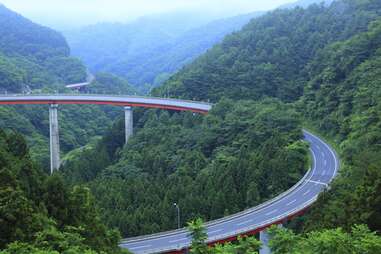
Geibikei Gorge offers a boat ride you won't find anywhere else in Japan. A traditional flat-bottomed boat is steered by a single oarsman using a long pole, gliding through a ravine with tall, craggy rock cliffs on both sides. The boatman sings a folk song as the boat drifts, and the sound bounces off the rock walls. The oarsman's song is a simple, weathered melody. Reaching Geibikei means driving two hours south from Morioka into Iwate, which is a long addition to a two-day trip — but the payoff is a stretch of silent water that feels untouched. The ride is calm enough for a break from hiking. Because it is pole-driven, the pace follows the current. Bring a camera; the cliffs rise sharply overhead. There is no engine noise, no rush, just the pole dipping into the river and the song echoing through the gorge.
Walk Pure Land Buddhism at Chūsonji
Hiraizumi was the capital of the Fujiwara clan in the 11th and 12th centuries, a cultural center that rivaled Kyoto. Today it is a UNESCO World Heritage Site, with government offices, spiritual complexes, and gardens designed around Pure Land Buddhism's serene visions. The most impressive stop is Chūsonji Temple, founded in 850. Its Konjiko-dō Golden Hall is decorated with gold leaf and mother-of-pearl inlay, and it holds the remains of three generations of Fujiwaras. A half-hour drive west from Geibikei Gorge brings you here, making it a logical final stop on a drive through Iwate. The temple's gold catches light even in shadow, and the hall's age — more than a thousand years — is visible in every surface. Stand in front of the Golden Hall and the region's samurai-era grandeur is suddenly easy to understand. It is the culmination.