Wine TravelBudget TravelGeorgiaNapa ValleyOutdoor AdventureCycling
The price gap is not small
Napa Valley's basic tasting flights run $40 to $60 a person; Dahlonega's start at $15 to $25. The gap only widens from there. Reserve and premium tastings in Dahlonega run $35 to $65, against Napa's $95 to $200-plus. Average bottle prices: $22 to $45 in Dahlonega, $65 to $180+ in Napa. Mid-tier lodging in Dahlonega comes in at $178 to $264 a night, while Visit Napa Valley's market averages put comparable Napa stays at $350 to $500 with limited budget options. Luxury resorts run $350 to $500 in Dahlonega versus $850 to $1,500+ in Napa. Even dinner splits: $80 to $130 for two with wine in Dahlonega, $180 to $300+ in Napa. The estimated daily spend per person lands at $140 to $210 in Dahlonega against Napa's $350 to $500-plus. For a three-night trip, that is the difference between a vacation and a splurge.
Federal recognition backs the wine
Dahlonega's wine boom rests on an official American Viticultural Area, recognized by the Alcohol and Tobacco Tax and Trade Bureau — the same federal designation that turned Napa Valley into a global powerhouse. The 133-square-mile Dahlonega Plateau sits more than 1,500 feet above sea level, where higher elevations keep temperatures cooler and grapes ripen slowly into deep, complex flavors without scorching in summer heat. The region's mineral-rich clay soils drain naturally, forcing grapevines to push roots deep underground; the vines produce smaller grapes packed with concentrated flavor. Those European-style growing conditions let local vintners turn out serious Cabernet Sauvignon, Chardonnay, and traditional sparkling wines. The bottles win competitions, and they carry the same legitimate credentials Napa's hillsides carry — at a fraction of the cost to the traveler at the tasting bar.
One October weekend wrecks the budget
The second weekend of October is Dahlonega's annual Gold Rush Days Festival, and it blows the budget story apart. More than 200,000 visitors flood a town of just 7,500 residents. Short-term daily rental rates jump from the normal $178 baseline to $264 to $350+ per night, and hosts often impose strict two- or three-night minimums. The same spike returns during peak fall foliage weeks, when East Coast travelers pack the region for scenic drives. The rest of the year, the square is walkable, parking is free, and tastings run on schedule — the festival weekend is the one time Dahlonega behaves like a crowded destination rather than a mountain town. A traveler who wants the cheap-wine-country experience at its maximum has to plan around those windows entirely; the pricing math holds for the other 50 or so weekends.
A 729-foot waterfall for $5
A 20-minute drive west of Dahlonega puts you at Amicalola Falls State Park, where a $5 daily parking pass leads to a 729-foot cascading waterfall — the tallest in the Southeast. It is the kind of natural spectacle that, in Napa's orbit, tends to come with resort pricing or a timed-entry ticket. Here it is a state park: a parking fee, trailheads, overlooks, done. The falls are the headline, but the park also serves as the gateway to the Blue Ridge, giving a wine-country trip a legitimate outdoor spine. The contrast with Napa is instructive: wine-country day trips there tend to be structured, expensive excursions. Amicalola is a parking pass and a trail. Visitors can pair a morning at the falls with an afternoon of tastings in Dahlonega and come out ahead on both time and money.
The Appalachian Trail starts up the road
Springer Mountain, a 30-minute drive from Dahlonega via US-19, is the official southern terminus of the Appalachian Trail, as named by the Appalachian Trail Conservancy. Unlike Asheville's Craggy Gardens, this trailhead comes without permit fees and without crowded parking lots. You can hike the trail's opening miles, stand at the southernmost point of the country's most iconic long footpath, and be back in town in time for an afternoon tasting. The access is direct and uncomplicated, which makes it one of the easiest places in the Southeast to step onto the trail. For hikers who take the route seriously, the terminus marker carries real weight; for casual visitors, it is a scenic ridge with the trailhead experience minus the hassle. Either way, it is an outing that justifies the car on a trip built around tasting rooms.
A town square built for walking
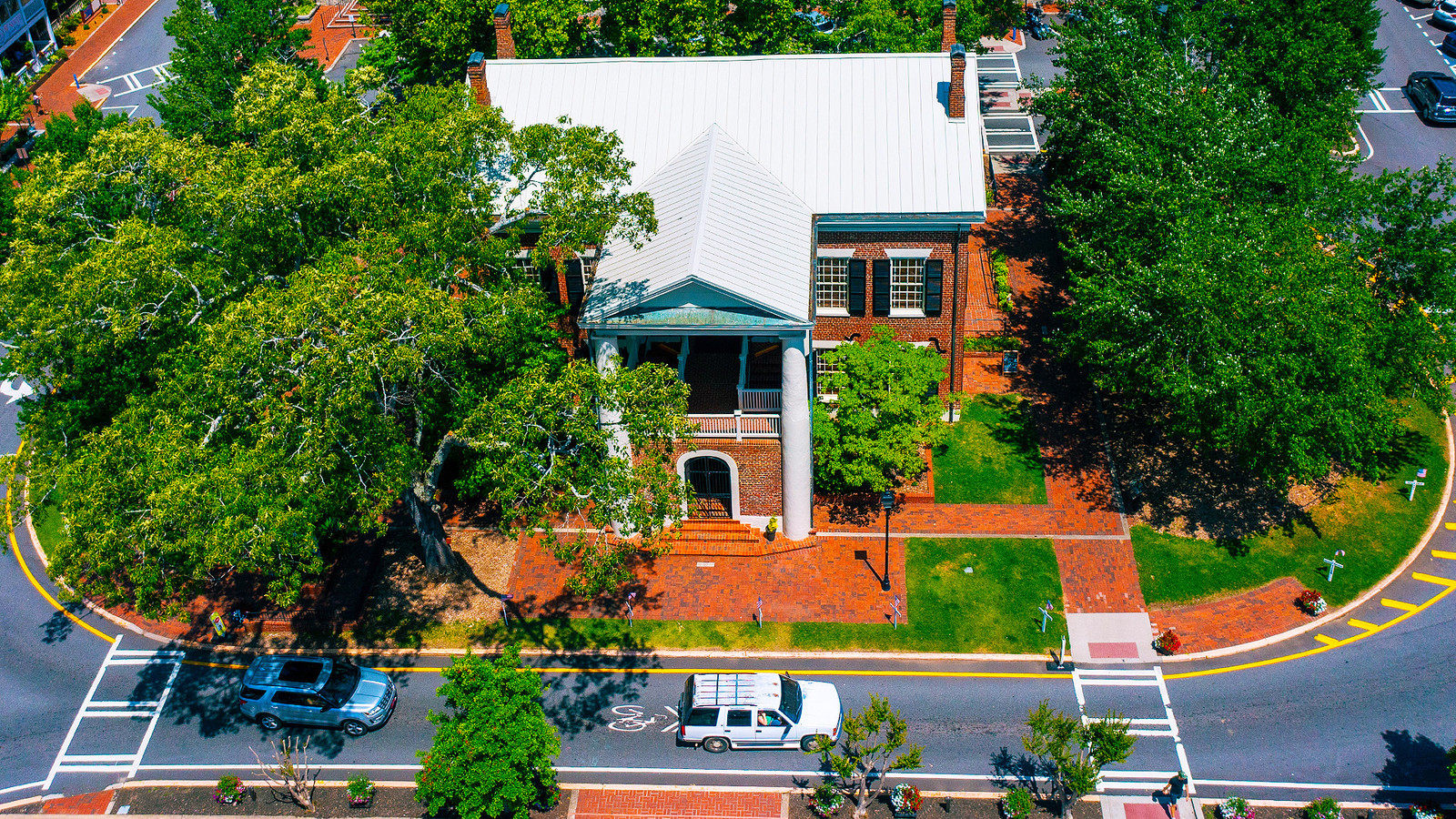
Dahlonega's compact, highly walkable town square offers largely free parking — a direct rebuke to Asheville's $20 parking spots, 45-minute restaurant waits, and $105-per-person Biltmore Estate grounds admission. The 1836 Lumpkin County Courthouse anchors the square and now houses the Gold Museum, admission $8. Local businesses fill the surrounding blocks: Bourbon Street Grille serves Cajun-inspired seafood on a porch, Canopy + The Roots pours Costa Rican coffee in an underground listening room, and Connie's on the square scoops ice cream. Entrees around the square average $18 to $28, compared to downtown Asheville where mid-range dining routinely hits $35 to $50 a plate. The whole experience is structured so you can park once, walk the square, and move between tastings and meals without a second thought about parking.
Napa's wine trail by bike
Skip the car and pedal your way through Dahlonega's wine country. The historic square's free parking lets you leave your vehicle and pick up a bike for the day, with vineyards clustered within a few miles. Standard tastings cost $15–$25 a person, while Napa's basic flights start at $40. Mid-tier lodging in Dahlonega stays in the $200s per night, whereas Napa's averages $350–$500. A budget-conscious traveler can easily spend only $140–$210 per day, including a mid-range dinner for two at $80–$130. Compare that to Napa's daily spend of $350–$500, and it's clear why a bike tour here is both a scenic and a financially savvy choice. You'll avoid parking fees, tasting-room sticker shock, and the stress of navigating crowded highways, all while savoring the same European-style growing conditions that make the region's wines award-winning.
Cliff Lede's patio is the first stop
While Napa's premier wineries charge $95 and up for a reserve tasting, Dahlonega offers comparable premium pours for just $35–$65. The difference isn't just in the ticket—Napa's famous estates are often packed, with parking fees and mandatory reservations adding to the stress. In Dahlonega, the compact square provides free parking, and the wineries themselves are less crowded, letting you actually talk to the winemaker. A reserve tasting here might include a private tour of the vineyard, a guided flight of Cabernet Sauvignon and traditional sparkling wines, and a look at the mineral-rich clay soils that give the grapes their concentrated flavor. You'll leave with a bottle or two—at an average price of $22–$45, compared to Napa's $65–$180+—making the whole experience feel like a steal.
The ride, and the cautions that come with it
The Yountville backroads are the draw: acre after acre of vineyards, tall trees throwing shade, warm sun and cool shade on an early-summer day. Practical cautions matter. Cell service drops out on some backroads north of town, so download an offline map before leaving the shop. Start early to beat the midday heat, especially in summer. Bring sunscreen and a light layer because the vineyard shade runs cool. No cycling gear is required — comfortable clothes you can move in are enough. Riders on the loop find themselves stopping unprompted to photograph the rows; the pace of a bike means you read street signs, recognize landmarks, and actually see the region instead of passing it. The one rule that is non-negotiable: if you taste at more than two wineries, designate a driver or arrange a return shuttle.