Indigenous TourismWendat NationQuebecCultural HeritageFirst Nations History
The Longhouse Fire
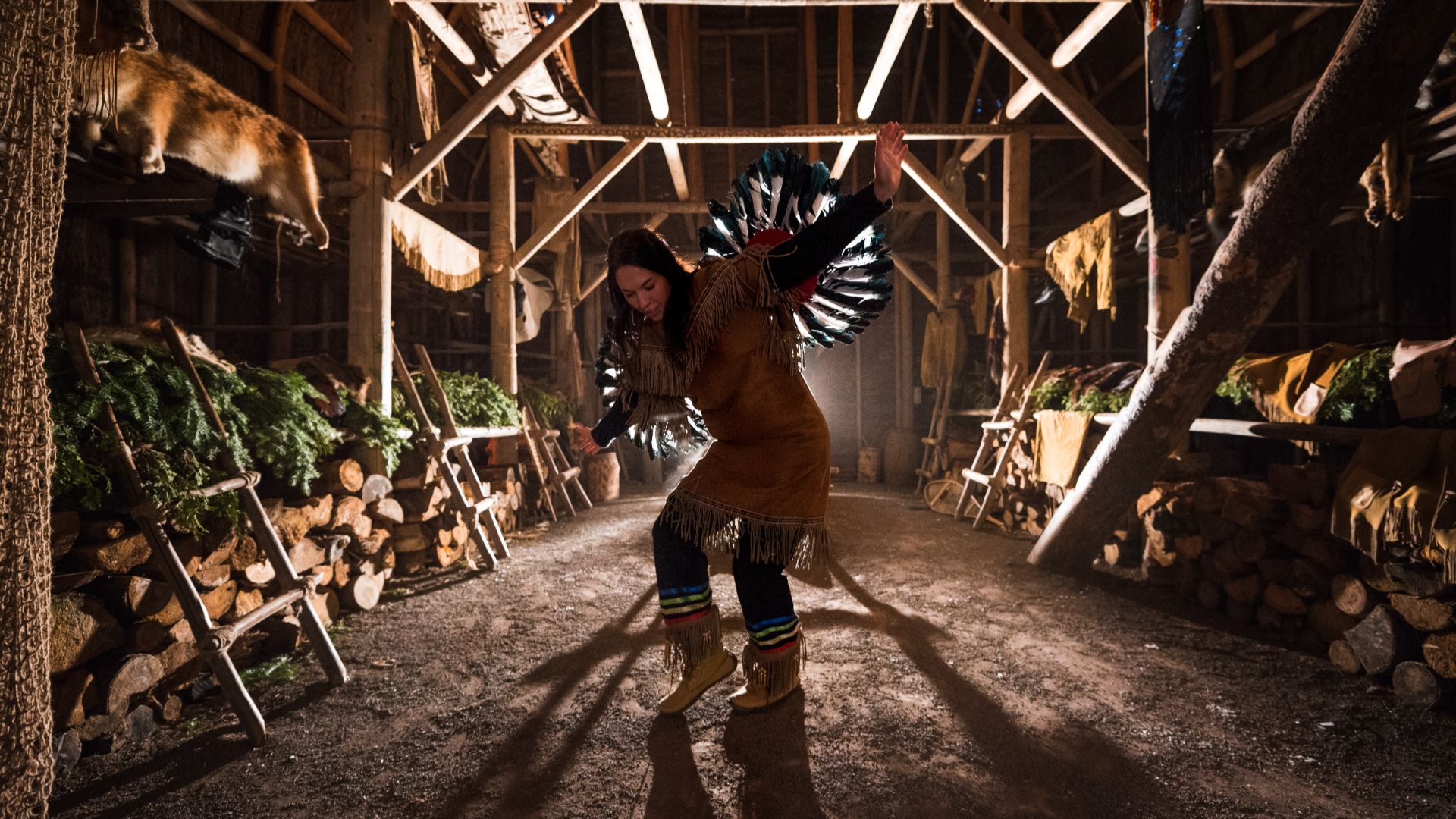
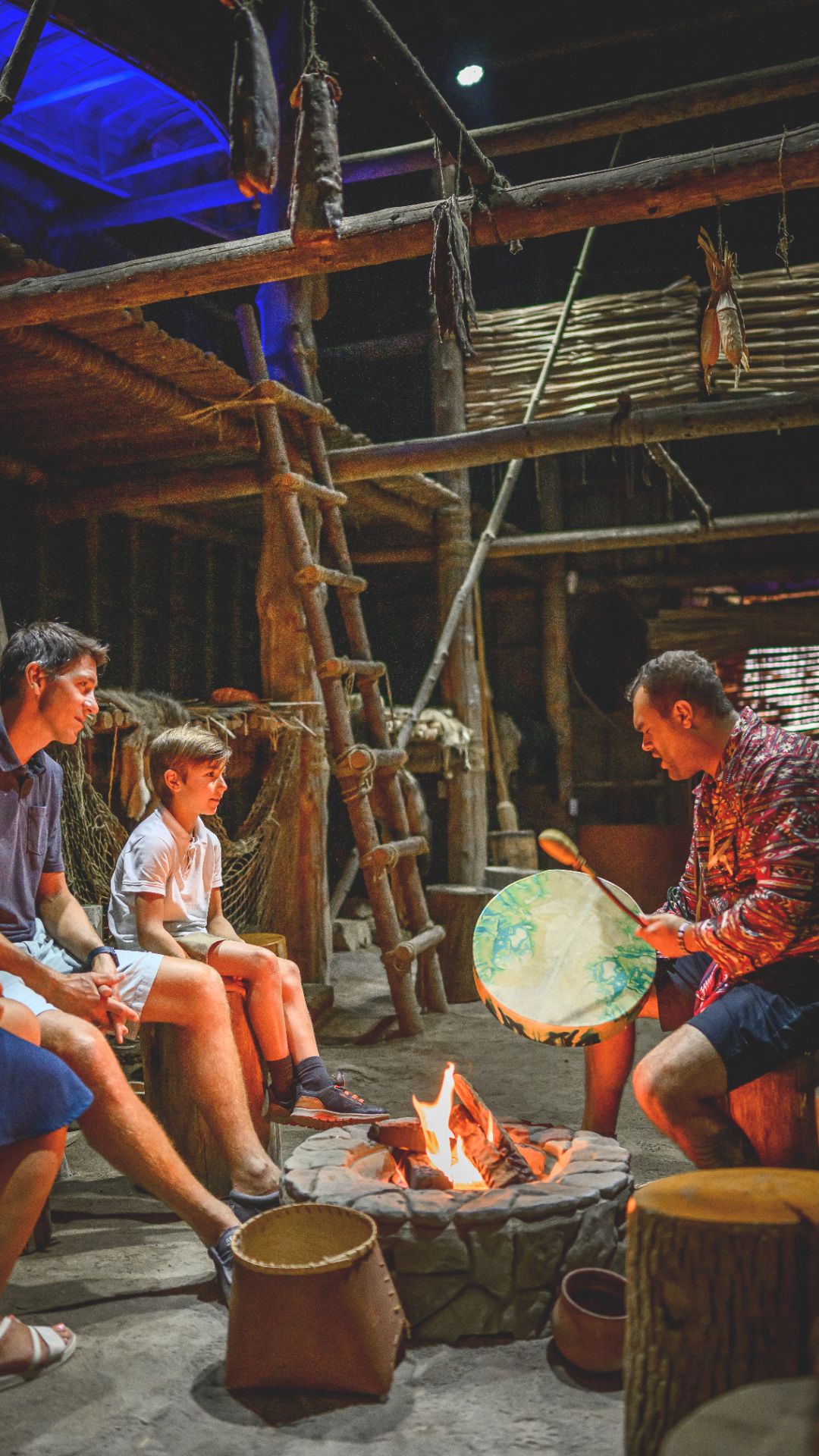
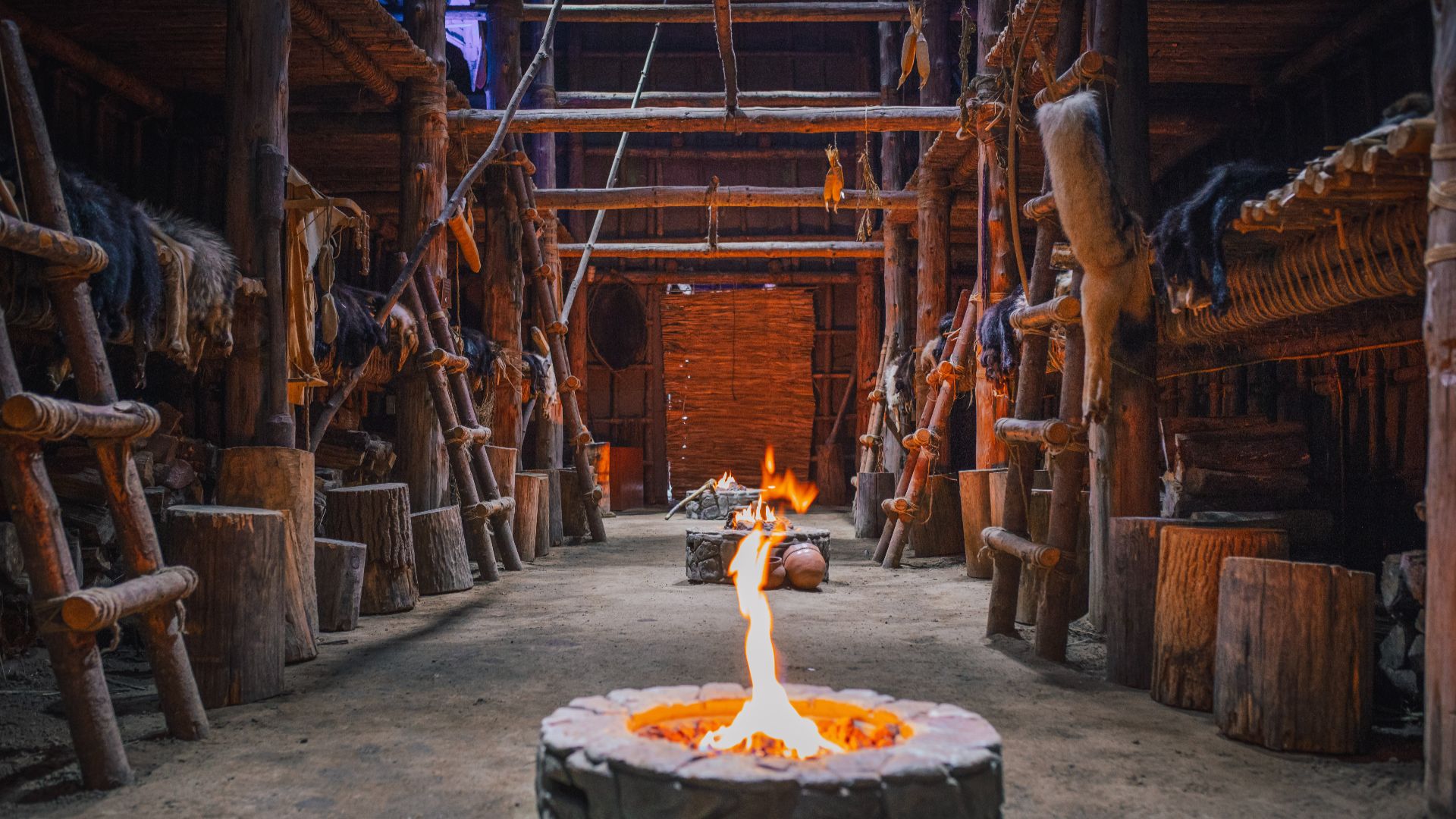
The longhouse at Wendake has no windows. Eyes adjust slowly to the dark, picking out rows of bunk beds built to house dozens of family members, dried ears of corn suspended from the rafters, a single smoke hole cut into the roof above. Visitors sit on log stools arranged around a fire that crackles in the centre of the structure — a design the Wendat have used for centuries.
Dominic Ste-Marie, a professional Wendat storyteller for 13 years, grew up listening to his grandmother tell tales in settings like this one. He picks his stories based on the audience in front of him. "It's very much vibe-based," he says. "It's really about making sure I feel like I can say something that's going to be useful."
The longhouse itself is the lesson, he tells visitors. Indigenous cultures produced just as many ideas per person per year as any other society. If people believe they share a common humanity, they will sit around the same fire. If they believe they think along similar lines, they might say they live in the same longhouse.
A Name Stolen, a Name Reclaimed
For centuries, the French word *Huron* — from *hure*, meaning "boar's head" — was the only label most Canadians heard for the Wendat people. French sailors coined the term as a derogatory reference to the bristly hairstyles of Wendat warriors. The people's own name for themselves, Wendat, means "islanders," a reference to their ancestral territory bordered on three sides by the waters of Georgian Bay and Lake Simcoe in southern Ontario.
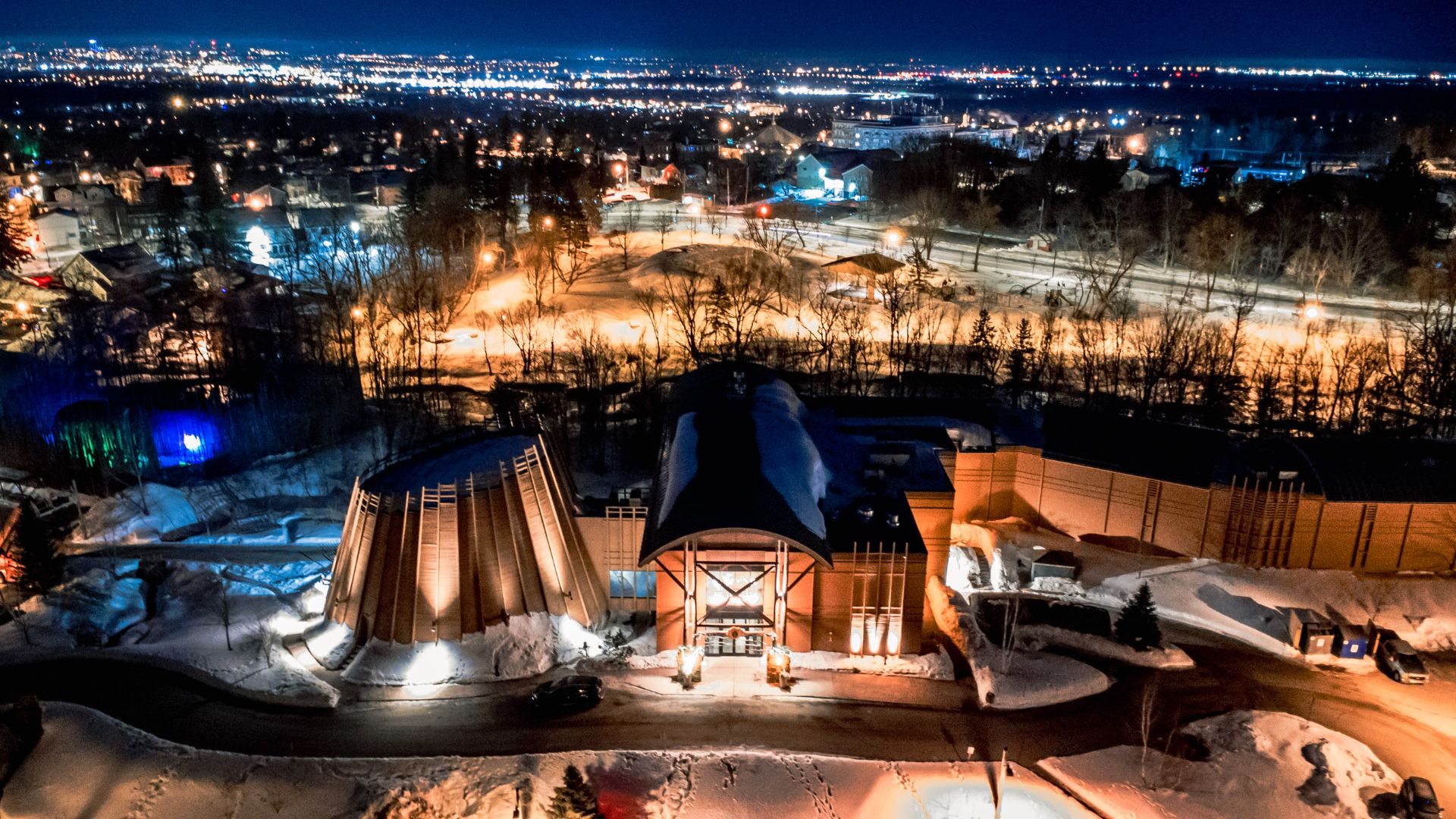
The community long used the compound "Huron-Wendat" to bridge the imposed and authentic names. But in a recent vote, the nation decided to drop *Huron* entirely — a deliberate act of narrative sovereignty. The decision echoes a deeper history: survivors of a shattered confederacy eventually settled at what is now Wendake, an urban reserve entirely surrounded by Quebec City's La Haute-Saint-Charles borough.
The Corn Husk Doll and the Morality of Storytelling
During a session in the longhouse, a visitor points to faceless dolls hanging from the wall. Without pause, Ste-Marie launches into the tale of the Corn Husk Doll: the Great Spirit of Corn fashioned a doll from dried husks and sent her to play with children across the villages. The doll grew enamoured with the children's adoration — and her own reflection. After ignoring repeated warnings to stop staring at herself in a pond, the Great Spirit removed her face.
It is a campfire story with teeth, a morality tale about vanity and equality honed by generations of Wendat storytellers and passed along in longhouses exactly like this one. Ste-Marie's grandmother told him stories of Mother Earth's creation when he was a child; now he carries the tradition forward, selecting tales that land with the specific group gathered before him.
Wendake's storytelling experience puts visitors across the fire from a Wendat host, where no question is off limits. What they hear — the language, ceremonies, and stories deliberately suppressed across decades in Canadian schools — is something most visitors arrive not knowing they got wrong.
A Fifteen-Minute Drive, a Centuries-Long Gap
Quebec City markets itself as one of North America's most European destinations — cobblestone lanes, historic city walls, a French-speaking old town that draws millions of visitors each year. Wendake sits just 15 minutes by road from those walls, yet most travellers arrive knowing almost nothing about the people who welcomed the first French explorers in 1534.
That knowledge gap is not accidental. Decades of deliberate erasure — of language, ceremony, and story — left the Wendat outside the version of Canadian history taught in schools. Travellers who grew up in Ontario's "Huronia" region, for instance, often discover at Wendake's Huron-Wendat Museum that the name they took as a point of local pride was a colonial imposition. The museum walks visitors through centuries of Wendat heritage, including the community's connection to the Georgian Bay homeland — a link many Canadian visitors never knew existed.
Dominic Ste-Marie frames reconciliation as a function of proximity and candour. "I think reconciliation begins by meeting each other, by exchanging ideas, sharing moments," he says. The longhouse activity guarantees a direct conversation with a Wendat individual who holds deep cultural knowledge, so that anything a visitor wonders about the community can be answered on the spot.
Beyond Wendake: Indigenous Tourism at Scale
Wendake has hosted outsiders for centuries — Ste-Marie jokes that modern tourism started "in 1534 when the first Frenchmen came out of the boat" — but the current iteration of cultural experiences is deliberately structured to let travellers engage without sanitising the history.
The travel company Intrepid has partnered with the Indigenous Tourism Association of Canada to integrate authentic Indigenous experiences into itineraries across the country and has extended the model to Australia, Mongolia, and Malaysia. Ste-Marie is keen to point visitors beyond Wendake. "There are just as many cultures per square kilometre of land in North America as there are in Europe," he says. "We are extremely proud of Wendake. But that doesn't mean that we want people to stop here."
For travellers, the practical calculus is straightforward: Wendake requires no special permits, no multi-day trek, no remote charter. It is an urban reserve reachable by car from one of Canada's most visited cities. The only prerequisite is the willingness to sit by a fire and hear what a Wendat storyteller chooses to share.